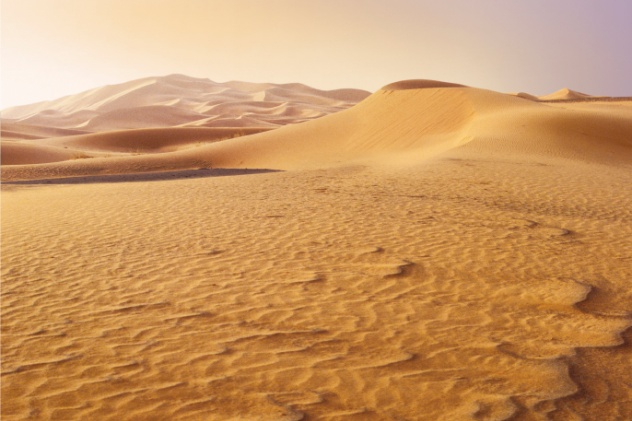
8,000 years ago, the Sahara was fertile and green. Farmers produced grains and millets in peace until — little did they know — gravitational influences from the solar system changed the Earth’s tilt by one degree,
[1] causing a flood of sunlight to permanently hit the Sahara. Almost instantly, it turned into a scorching desert, expanding, leaving dead crops in its wake, chasing the farmers to the Oases where they became stranded like shipwrecked survivors. Many sought refuge in the Nile, a resilient river that the Sahara could not encroach upon because of its regular flooding.
For the survivors of the Sahara, the Nile was no paradise. High floods devastated their settlements. But soon the Egyptians were able to predict the flooding by watching the star Sirius’s path through the night sky.[2] When the flood waters receded, the land left behind was fertile thanks to sediments in the water. Organizing their lives around the flooding of the Nile, the ancient Egyptians divided their year into three seasons: the inundation, the growth, and the harvest.